iCAP™ PRO XP ICP-OES
助您获得所需的可靠结果。通过延长分析周期满足您的数据要求。Thermo Scientific™ iCAP™ PRO XP ICP-OES 全方位坚固耐用
森德仪器提供 赛默飞/Thermo Fisher iCAP™ PRO XP ICP-OES 在全国范围内的代理经销、选型咨询、报价沟通、采购支持、安装培训和售后协同服务,价格面议。

微信扫码沟通
扫码添加技术顾问,发送产品型号或应用需求。
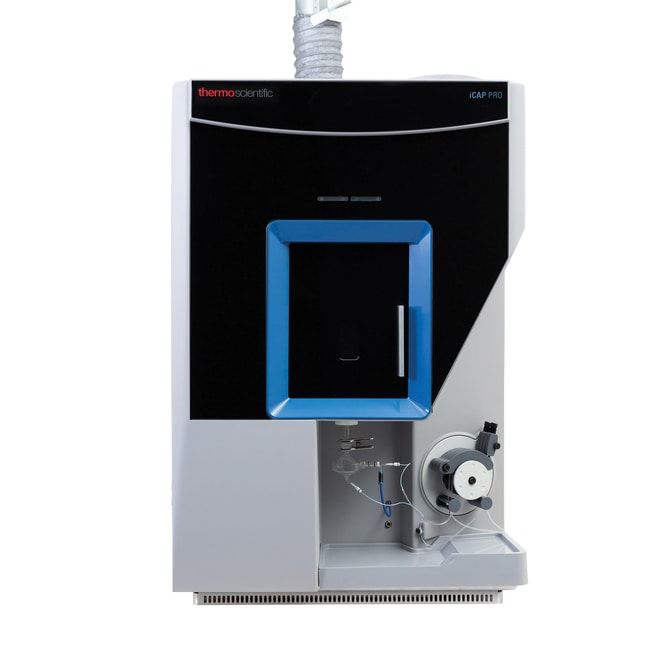
Thermo Scientific™ iCAP™ PRO XP ICP-OES 拥有理想性能,在分析高基质痕量元素样品时,可获得多元素的高灵敏度检测结果,满足您的数据要求。该系统坚固耐用,所需的工作台空间少,用户维护工作量极小
带有垂直炬管的台式同步 ICP 光谱仪,包含经过吹扫的中阶梯光栅多色仪和电荷注入设备 (CID) 阵列检测器。其中包括:
iCAP PRO 系列 ICP-OES 已获得 ACT 标签认证
iCAP PRO 系列 ICP-OES(已获得 My Green Lab 的 ACT 标签)可减少实验室的环境影响。ACT 环境影响因素标签是实验室产品的世界前列生态标签。该计划可确保在环境影响数据报告方面的问责、一致性和透明度,从而实现可持续的实验室采购。其由科学家和采购专家共同设计,旨在提供有关实验室产品可持续性概况的清晰第三方验证信息。ACT 在制造、能源和用水、包装和报废影响等方面提供所需的透明度,因此便于环保型产品的选择,并减少实验室供应链的碳影响。
采购问答
<p>Thermo Fisher Scientific has over thirty years of experience in designing and manufacturing ICP systems. We offer both ICP-OES and ICP-MS products. Our ICPOES products offer both dedicated radial and dual radial/axial views. In our ICP-MS portfolio, we offer both single and triple quadrupole mass spectrometers together with high-resolution magnetic sector mass spectrometers:<br/> - Thermo Scientific iCAP 7000 Plus ICP-OES Series (https://www.thermofisher.com/uk/en/home/industrial/spectroscopy-elemental-isotope-analysis/trace-elemental-analysis/inductively-coupled-plasma-optical-emission-spectrometry-icp-oes.html)<br/> - Thermo Scientific iCAP RQ ICP-MS (https://www.thermofisher.com/order/catalog/product/IQLAAGGAAQFAQKMBIT)<br/> - Thermo Scientific iCAP TQ ICP-MS (https://www.thermofisher.com/order/catalog/product/731546)<br/> - Thermo Scientific ELEMENT 2 High-Resolution ICP-MS Series (https://www.thermofisher.com/order/catalog/product/IQLAAEGAAMFABWMAFB)<br/> - Thermo Scientific ELEMENT XR High-Resolution ICP-MS (https://www.thermofisher.com/order/catalog/product/IQLAAEGAAMFABWMAFB)<br/><br/> The iCAP RQ ICP-MS (https://www.thermofisher.com/order/catalog/product/IQLAAGGAAQFAQKMBIT) is the recommended model for pharmaceutical elemental impurities.</p>
<p>In general, ICP-OES is perfectly capable of achieving the required detection limits of USP chapter <232>. However, there can be two limiting factors: Due to the definition of PDE values for individual elements, the larger the daily dose is for a given drug product, the lower is the detection limit required. There are also ways to improve the detection capabilities of an ICP-OES in cases where more sensitivity is required, e.g., by means of a hydride generation system. Such a system can typically increase the detection sensitivity for e.g., Arsenic (As) and thus helps to still achieve the required detection limits.</p>
Sende Lab
当前页面用于确认具体仪器型号、参数和采购沟通;如果要从行业热点、测试标准、实验室建设和验收资料角度规划整套能力,可继续查看 Sende Lab。
请填写必填信息,我们将在工作日尽快回复。
<p>Interferences are of most concern in ICP-MS. One can basically distinguish two types of interferences: spectral interferences and physical interferences. Mostly, polyatomic interferences are observed, but can mostly be efficiently suppressed by using an instrument equipped with a collision/reaction cell system.<br/><br/> Other interferences observed are isobaric interferences, for example, caused by two elements present in a sample that have isotopes with a common mass number. Mathematical correction using another isotope of the interfering element and calculating the contribution to the signal by means of the isotopic abundance is a way to overcome these interferences.<br/><br/> Doubly charged ions can interfere with some elements, especially if a high concentration of an element with a low 2nd ionization potential is present in a sample, e.g., samarium (Sm), a member of the rare earth elements, that would interfere with the detection of As at m/z 75.<br/><br/> In addition, ionization effects may lead to false positives, for example, if carbon is present in a sample (e.g., after direct dissolution of a sugar containing product in water), As may show an elevated response. Microwave digested samples are normally not affected.</p>
<p>Both ICP-OES as well as ICP-MS can acquire full spectra to identify all elements present in a sample. This function is not only useful for method development where it helps to identify the origin of interference but it can also be used as part of a risk-based testing approach. If suppliers issue certificates for given elements, these can be removed from quantitative testing, and instead be systematically screened for in a spot-testing approach to assure compliance at all times.</p>
<p>Yes, autodilution can be used on both ICP-OES and ICP-MS to automate and streamline preparation of calibration standards and perform final sample dilutions. Autodilution systems are also based on valve systems similar to segmented flow introduction systems and are capable of generating different calibration curves (e.g., for drug products with varying daily dosage) from a single stock solution. This reduces the workload for laboratory personnel and also reduces the amount of human interaction with the samples. If a given sample exceeds the calibration range or leads to an internal standard response outside the allowed acceptance criteria, a sample can be automatically diluted and the analysis is repeated. At the same time, autodilution systems are completely integrated into the Qtegra ISDS (https://www.thermofisher.com/order/catalog/product/IQLAAEGABSFAOVMBCZ) operating software, so that all dilution (prescriptive or automatic) steps are documented in a compliant software environment. </p>
<p>Segmented flow sample introduction systems are a very helpful tool to increase the productivity in your laboratory. Such devices work with a valve system that enables fast uptake of the sample to the plasma, and minimize the wash out times between different samples. Therefore, the time required for analysis can be shortened considerably. An example for such a system is the sprint valve system available on the Thermo Scientific iCAP 7600 ICP-OES (https://www.thermofisher.com/order/catalog/product/842320076121).</p>
<p>Slurry nebulization is more commonly used in environmental testing applications. In principle, slurry nebulization can be used for pharmaceutical testing and there have been studies done on this. Obviously particle size is a key factor here - the smaller the particles the better. However, it is also worth pointing out that the method preferred by USP is microwave digestion.</p>
<p>It is possible to run samples prepared in organic solvents using ICP-MS. In contrast to ICP-OES, some additional measures have to be taken to achieve optimum performance of the instrument. In particular, the ICP-MS instrument must be fitted with an organics kit which includes a mass flow controller for introducing an Ar/oxygen (O2) mixture into the plasma, to burn up the carbon in the solvent to prevent it from condensing on the cones.</p>
<p>Modern ICP-MS instrumentation has become far easier to operate, both in terms of hardware and software. Furthermore, the advent of intelligent interference removal features such as “low mass cut-off” and kinetic energy discrimination (KED) mode has more or less overcome the need to worry about which settings (cell gas, operation mode, cell operating parameters) are appropriate for which element. Overall, the barrier to success with ICP-MS has been lowered significantly and it should not be viewed as a technically challenging alternative to ICP-OES.</p>
<p>The parameters BEC, LOD, and LOQ are frequently used to describe the detection capabilities of an analytical instrument. The acronym BEC abbreviates the parameter blank equivalent concentration. This value refers to the “apparent concentration”, and is composed of the contamination level in the blank, any residual interference signal, and the instrument background (from the detection system). The parameter instrumental detection limit (IDL, often referred to as Limit of Detection, LOD) is defined as the limit of detection that can be achieved by the instrument used. This amount is typically defined as a quantity that gives a distinguishable signal in the detection system. The common definition for the IDL is based upon the standard deviation (LOD = 3.3 x standard deviation of the regression line of calibration curve) of a blank sample measured in the beginning of a calibration curve, or a minimum signal to noise ratio of 3:1. Both parameters, BEC and IDL are automatically calculated by Thermo Scientific Qtegra Intelligent Scientific Data Solution (ISDS) platform software (https://www.thermofisher.com/order/catalog/product/IQLAAEGABSFAOVMBCZ). In contrast, on the IDL, the parameter method detection limit (MDL) includes the extent of all dilution steps carried out during the sample preparation. The MDL is typically based upon a blank solution that has been prepared according to the preparation procedure that is being used to prepare all the samples. In situations where there is no sample preparation or if the preparation involves a single dilution step, MDLs might be calculated based on the standard deviation of a low level standard. MDL concentrations are always more conservative than IDL concentrations.</p>