MSA-330 多流道浆料 XRF 分析器
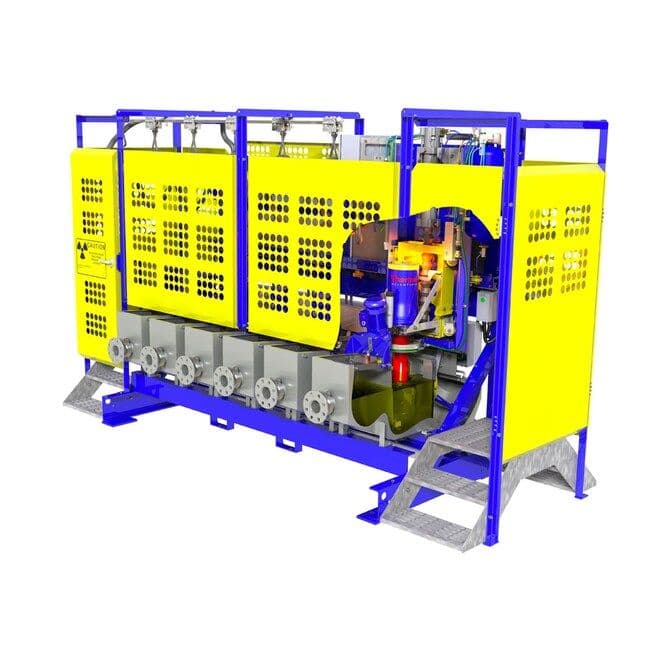
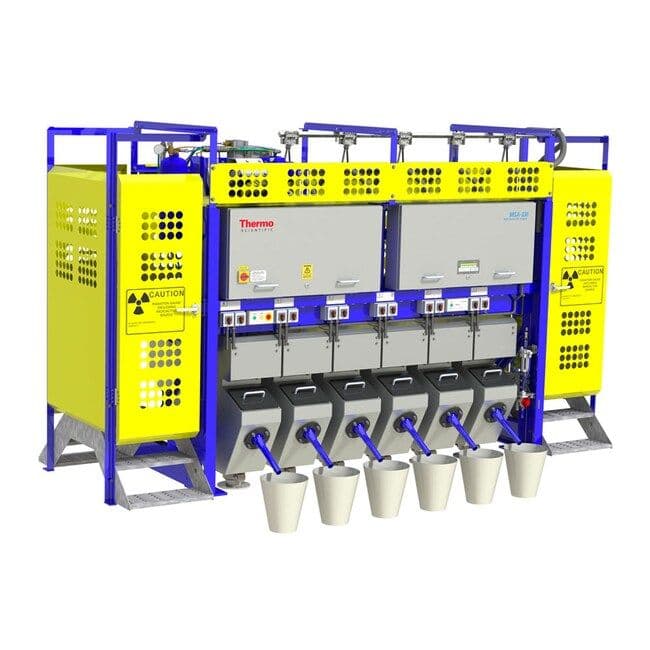
Thermo Scientific™ MSA-330 多流道浆料 XRF 分析器提供高达 12 个浆液流道的准确、高性价比元素分析。
森德仪器提供 赛默飞/Thermo Fisher MSA-330 多流道浆料 XRF 分析器 在全国范围内的代理经销、选型咨询、报价沟通、采购支持、安装培训和售后协同服务,价格面议。

微信扫码沟通
扫码添加技术顾问,发送产品型号或应用需求。
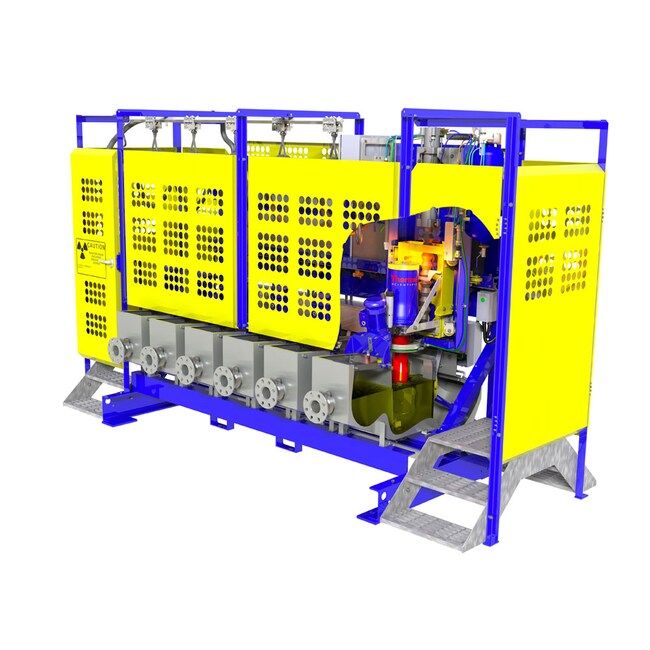
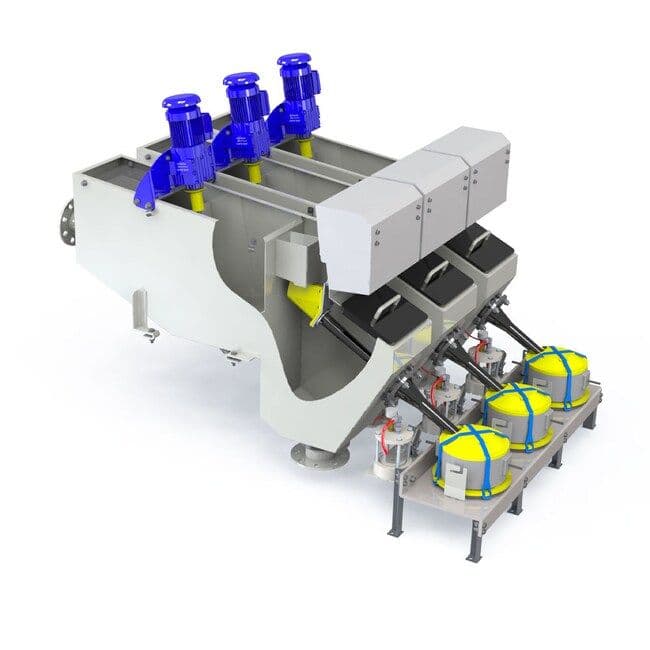
使用 Thermo Scientific™ MSA-330 多流道浆料 XRF 分析器可提供高达 12 个浆液流道的可靠、准确、高性价比元素分析。每条材料流均处于独立分析区内,可确保无交叉污染。MSA 分析器无需泵输送浆料,压头损失低,可以降低工厂内的标高,从而大大节省工程和安装费用。根据 MSA 多流道浆料分析器所提供的信息,工厂操作员可以实时顺应工艺趋势并做出手动或自动更改,以优化工艺。
主要特点和优点
选件
储槽尺寸
订购信息:
所有系统均按照客户要求配置;有关详细信息,请联系您的 Thermo Scientific 销售代表。
建议用于:
采购问答
<p>Yes, and it could be significant. First, let's assume that all streams are analyzed as intended. Cycling around each stream takes time and the frequency of measurement is therefore lower than with a dedicated analyzer. Each additional stream means a longer time between measurements. For some applications, this isn't a problem, a measurement every 15 mins may be sufficient. However, for greater process control and benefit from real-time continuous measurement, the Thermo Scientific AnStat-330 Sampling and Analysis Station combines representative sampling and elemental analysis into one product. However, the second challenge comes from routing several streams to a single location. In a sizeable plant, this often involves large pumps, pumping slurry through long sections of pipes, creating risks such as pipe blockage or pump failure. Analyzers measuring 20 streams could be reduced to 4 or 5 streams only after a few months of operation because of the reduced availability of each lines from blockages. Slurry density and viscosity often makes it difficult to transport and sample representatively. Using dedicated analyzers on critical streams and then strategically placing multi-stream analyzers to measure between 3 and 12 streams typically provides a good balance between cost, analysis intervals, and uptime. </p>
<p>To fully monitor the recirculating load, it is also necessary to monitor the rougher and scavenger concentrates and cleaner tailing streams. As recirculating loads tend to build up slowly with time, these analyses are not required on a minute-by-minute basis so these streams can be monitored with a lower cost-per-stream centralized analyzer.</p>
<p>If the critical streams are monitored frequently as per the recommended criteria, the operators should be able to control the plant to give overall stability and best metallurgical results at minimum cost. The less critical intermediate streams can then be monitored at a lower frequency for the fine tuning of the circuit.<br/><br/> The degree of confidence required in the assay-based control decisions must be known. Streams that are more critical for control of the plant need to be monitored more frequently. Trends in plant performance will then be shown in more detail, showing effect of control actions on grade in real-time and giving greater confidence in control decisions. For example, in a base metal concentrator, the main objective might be to minimize metal losses in primary floatation while producing a particular concentrate grade in the cleaners. In addition, test work may show that recirculating loads tend to build up in the cleaning stages which is a result of recovery of excessive gangue in the rougher concentrate. Continuous analysis of tailings grades provides a critical tool in the operation of rougher flotation. On-line analysis of concentrates provides a tool to manage grade-recovery in the cleaners and better control impurities to meet the smelter requirements. </p>
Sende Lab
当前页面用于确认具体仪器型号、参数和采购沟通;如果要从行业热点、测试标准、实验室建设和验收资料角度规划整套能力,可继续查看 Sende Lab。
请填写必填信息,我们将在工作日尽快回复。
<p>The elements to be analyzed are determined by the objectives of the process control strategy and the particular metallurgical problems which are anticipated from prior metallurgical test work. The frequency of analysis required, often referred to as the assay update time, depends on the following criteria:<br/><br/> - The fluctuation in assays in a given process stream considering the residence times of the processes immediately upstream<br/> - The stability of the circuit<br/> - At a minimum, the assay update times of the analyzers for the critical streams should be less than half of the retention time of the preceding process stage<br/><br/> Therefore, in the tailings stream from a scavenger bank of cells with a retention time of 5 mins, the grade can be expected to vary considerably in 2 mins during upset conditions or reactions to process control actions so on-line analysis should be made at an interval less than this to provide the best visibility of real-time plant performance. To obtain these sorts of assay update times, one requires dedicated analyzers or a centralized analyzer with just a few streams located nearby the process sample points.</p>
<p>Before selecting an online slurry analysis system, consider if light elements will need to be measured and if the measurement technique is amenable, given the expected variation in mineralogical and particle size for the process. In addition, look at the streams to be measured and ask these questions:<br/><br/> - What is critical for control of process (usually includes Feed, Final Tail, and Concentrate)?<br/> - Is there a need for understanding trends within the process (usually includes Rougher Concentrate and Cleaner Tails)?<br/> - What are the elements to be measured in each stream?<br/><br/> Based on this information, the various trade-offs taking into account all factors between centralized and dedicated analyzers, Prompt Gamma Neutron Activation Analysis (PGNAA) and X-ray fluorescence (XRF), capital and maintenance cost etc., can be worked out and a recommendation made for the optimum system configuration for the particular plant<br/><br/> For example, in a nickel concentrator, it is essential to control the concentration of talc (or MgO) in the concentrate stream. To be able to control the concentration of talc in the concentrate, one requires measurement of Ni and talc in each of the feeds, rougher concentrate, and final concentrate streams so that the appropriate concentration gradients between these can be optimized and the ratio of Ni/talc can be maximized at each stage for minimum reagent usage. It may also be useful to measure Fe and S in the feed stream because this may give an indication of the nickel mineralogy entering the plant. In all other streams, it is only necessary to measure Ni because the information from these streams is used only for monitoring the recovery of Ni. Thus, PGNAAA would be required with multiplexing for the three main streams, and possibly a multi-stream analyzer (using XRF technology) for the other streams).</p>
<p>When selecting the right online slurry analysis system, there are several capital constraints that should be considered, including<br/><br/> - Capital investment,<br/> - Economic benefits expected<br/> - Cost of on-going maintenance<br/> - Flexibility of system modules<br/> - Incremental benefits of less essential assays.<br/><br/> The economic benefits of having an on-line slurry analysis system coupled to a control system, be it manual or fully automatic, comes from one or more of the following: increase in metal recovery, improvement in concentrate grade and control of impurities, reduction in reagent consumption, decrease in operating costs, and improvement in stability of the operation.<br/><br/> These benefits have to be weighed against the capital investment of the analysis system and the cost of on-going maintenance including mechanical repairs, sample pump servicing or replacement, sample transport system troubleshooting, electronic repairs, analyzer downtime and calibration. The flexibility of hybrid systems of dedicated analyzers for the critical streams and multi-stream analyzers for the less critical streams enables the most cost effective analysis system to be selected for each particular plant. In working out what streams are to be measured, a cost benefit analysis should be carried out to guide the decision making process.</p>
<p>There are three physical plant layout considerations when selecting an online slurry analysis system:<br/><br/> - Length of small-bore sample transport piping from primary samplers to a centralized analyzer unit <br/> - Number of pumps required for sample transport, both supply and return <br/> - Whether or not gravity can be used for transportation of stream in order to eliminate the needs for sample pumps, thereby improving sample availability and reducing OPEX<br/><br/> When using the multi-stream analyzers one tries to minimize the length of the small-bore sample transport piping and hoses from the primary samplers to the analyzer. If one stream is a long way from others in the plant, from an on-going maintenance point of view, it would be prudent to use a dedicated analyzer for that stream and transport critical process data digitally rather than transport small volume slurry samples over long distances as this is inherently a low availability, high OPEX solution<br/><br/> To further minimize on-going maintenance, multi-stream analyzer unit(s) should be situated to minimize the number of pumps required to transport sampled streams. Ideally, the analyzer(s) should be located so that the sub-streams flow under gravity, or the pressure of the main line from which they were taken, to the analyzer and then gravity feedback to a convenient point in the process.<br/><br/> If there are large distances in the plant between the streams which are to be measured, it may be prudent to locate centralized analyzers near a cluster of sample points and use several analyzers, instead of a single centralized highly-mulitplex analyzer requiring double pumped sampling systems. While the CAPEX may be higher, a study of OPEX, availability, and utilization will show that this is more than offset by a substantial reduction in on-going maintenance costs. As the downtime is minimized, greater availability is realized resulting in greater utilization and realizing full ROI of the investment.</p>
<p>The following process control elements should be considered in selecting the most suitable configuration for an online slurry analysis system:<br/><br/> - Elements to be analyzed. For example, analyzers utilizing the Prompt Gamma Neutron Activation Analysis (PGNAA) technique have a distinct advantage over analyzers using X-ray fluorescence by being able to measure light elements (those lower than calcium on the periodic table)<br/> - Frequency of analysis (assay update time) as dictated by the process control strategy<br/> - Residence time of upstream process<br/> - Importance of stream in overall control strategy<br/> - Confidence required in assay-based control decisions</p>