NextGuard™ X 射线检测系统
使用多功能 X 射线检测系统可以轻松快速地从金属检测向 X 射线检测转变,并确保为您的客户提供更安全的产品。
森德仪器提供 赛默飞/Thermo Fisher NextGuard™ X 射线检测系统 在全国范围内的代理经销、选型咨询、报价沟通、采购支持、安装培训和售后协同服务,价格面议。

微信扫码沟通
扫码添加技术顾问,发送产品型号或应用需求。
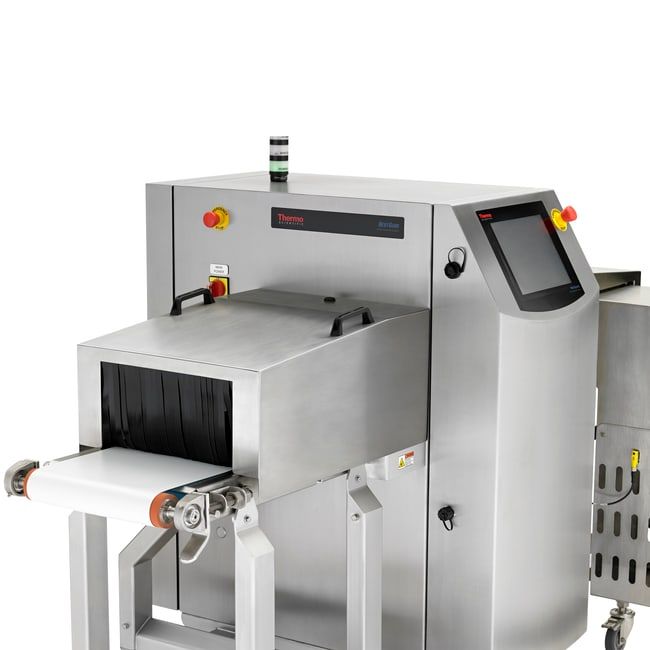
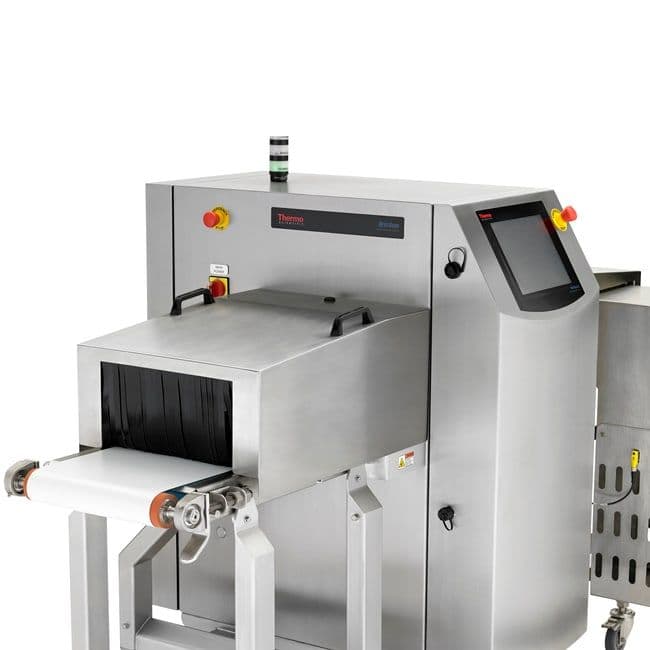
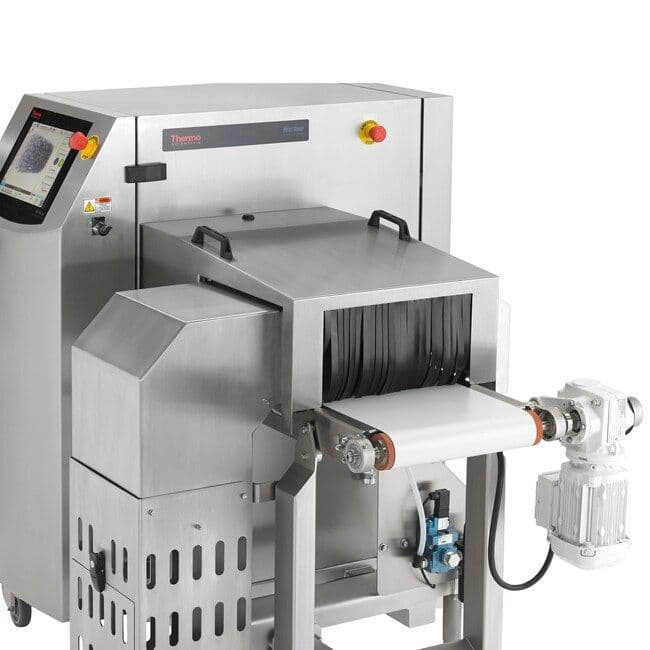
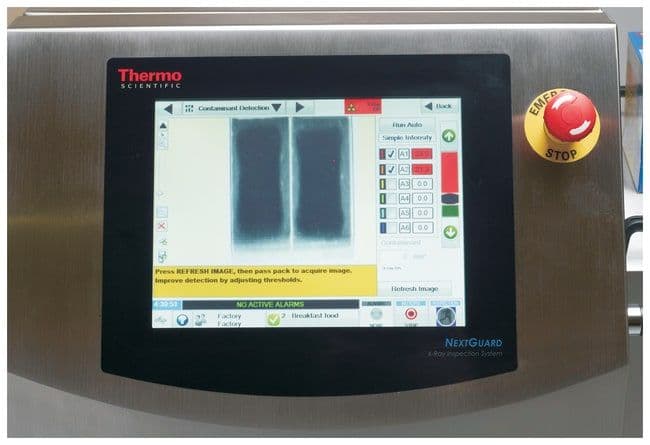
使用 Thermo Scientific™ NextGuard™ X 射线检测系统,可发现金属和非金属异物,同时消除金属检测器常见的潮湿产品效应。NextGuard 系统专为众多食品应用设计,拥有了更强大的功能,可使用易于定制的 VISION 软件检查包装产品是否存在缺失部分或成分、罐装不足或过量以及其他质量问题。Conveyor 和 C500 型号均为易于使用、高性价比并且设计缜密的系统,可消除从金属探测向 X 射线检测转变过程中的常见阻碍。
新款改进型 NextGuard X 射线检测系统的特点:
附加收益:
系统定制选项:
采购问答
<p>X-ray inspection of packaged and bulk food products is proven to be extremely safe. There is no documented evidence of adverse health effects of X-rays on equipment operators, the food products that travel through the equipment, and ultimately, the pet consuming those products.</p>
<p>Since wet or moist pet foods have a high product effect, X-ray inspection is the best technology to detect contaminants such as metal, glass, stone, and other dense foreign objects.</p>
<p>Metal detection works very well with dry/kibble pet food and treats that do not have a product effect that wet or moist pet foods do. Metal detection equipment provides reliable, cost-effective protection from even the smallest metal contaminants found in pet food production anywhere in a process. If the packaging material contains metal, X-ray inspection would be the right choice. In addition, if there are other contaminant concerns such as stone, high density plastic or glass, X-ray inspection systems will detect these contaminants as well.</p>
<p>There are several points in the pet food production process that benefit from food safety inspection (metal detectors, X-ray inspection) and checkweighing technology. Here are some examples:<br/><br/> - Incoming ingredients. Large pet food producers may require that their vendors meet specific HACCP objectives and provide proof of inspection. Even with those methodologies in place, some will also inspect incoming ingredients. Typical incoming inspection consists of drop through and bulk flow metal detectors.<br/><br/> - After mixing/rendering. Processing equipment such as an industrial blender or mixer will age over time and potentially introduce small particles or shavings of metal into the product being processed. It is important to position inspection equipment after this process equipment to catch any contaminants as early in production as possible, so it doesn't affect final product quality as well as damage equipment further downstream. The inspection equipment type will depend on the product type and whether its formulation creates a “product effect”. Wet or moist pet food products are more suited toward X-ray equipment, while metal detectors perform well with dry or kibble type pet food products.<br/><br/> - After filling/packing. The recommended inspection equipment type is dependent on the packaging material or combination of materials that have been selected for this product. Metal components such as aluminum foil trays, metal cans, aluminum foil bags or metalized firm structures are much more suited to X-ray inspection. Flexible materials without a metal component, paperboard folding cartons, bags or pouches work very well with either metal detectors or X-ray inspection systems. At this stage, checkweighers are frequently used in combination with a metal detector or X-ray inspection system to ensure product weight matches information printed on the product label.<br/><br/> - After case packing. After case packing is another good inspection point as this is the last stop before the finished products leave the facility. The recommended inspection equipment type is dependent on the packaging material of the individual product. This is typically done via X-ray inspection. In addition to contaminant detection, the X-ray system's ability to detect missing pieces will help ensure that the specified count has been loaded into the case. In certain situations, especially when X-ray inspection is not included at the end of the line, checkweighers are placed here to ensure that the proper number of packages are contained inside the case.</p>
Sende Lab
当前页面用于确认具体仪器型号、参数和采购沟通;如果要从行业热点、测试标准、实验室建设和验收资料角度规划整套能力,可继续查看 Sende Lab。
请填写必填信息,我们将在工作日尽快回复。
<p>“Product effect” occurs when a product has a conductive property which affects the magnetic field generated by the food metal detector. This is typically found in high salt, high moisture product environments. For example, wet cat food will show significantly more product effect due to its high moisture and salt content. This negatively impacts the metal detector's ability to distinguish between actual non-ferrous metal contaminants and the false signal given by the combination of typical product attributes. In these situations, industrial X-ray inspection equipment will produce significantly better results since product effect is not a factor.</p>
<p>Checkweighers do not detect physical contaminants but they can be combined with food metal detectors and X-ray inspection systems that do detect contaminants. Food metal detection systems provide reliable, cost-effective protection from even the smallest metal contaminants found anywhere in a food production process. Food X-ray inspection systems provide protection from metal, glass, stone and other dense foreign objects for almost any type of packaged, bulk, or piped product.<br/><br/> Food manufacturers can find metallic and non-metallic foreign objects and eliminate “wet” product effects common with metal detectors with the Thermo Scientific NextGuard X-ray Detection Systems (https://www.thermofisher.com/order/catalog/product/NEXTGUARDPRO). Designed for a wide variety of food applications, NextGuard systems offer enhanced capabilities to inspect packaged products for missing pieces or components, under and over-fills, and other quality problems.</p>
<p>There are several points in the baked goods/snack foods production process that benefit from food safety inspection using metal detectors (https://www.thermofisher.com/us/en/home/industrial/food-beverage/food-weighing-inspection/metal-detectors.html), X-ray inspection (https://www.thermofisher.com/us/en/home/industrial/food-beverage/food-weighing-inspection/x-ray-detection-inspection-systems.html), or checkweighing (https://www.thermofisher.com/us/en/home/industrial/food-beverage/food-weighing-inspection/checkweighers.html)technology. They are listed below:<br/><br/> 1. Incoming ingredients. Most of the larger bakers demand that their vendors meet specific HACCP objectives. They may require that metal detectors be used, provide proof of inspection, etc. Even with those methodologies in place, some will also inspect incoming ingredients. Typical incoming inspection consists of drop through and bulk flow metal detectors.<br/><br/> 2. Dough stage. Before the product is baked or otherwise processed, this is an ideal location to conduct upstream inspection. Metal detectors are the equipment of choice because metal-based packaging is not part of the process at this stage. Bar products are another example. They can be examined right after sheeting, or after the individual bars are cut, or before the product goes into the wrapper. Alternatively, they can also be inspected after packaging.<br/><br/> 3. After baking/before packaging. The inspection equipment type will depend on the product type and whether or not its formulation creates a “product effect”. Warm, moist, high salt content products such as breads are more suited toward X-ray equipment, while metal detectors perform well with typically-inert snack foods. Checkweighers can also be located at this stage to make sure that the product weight falls within the min/max specifications and will not create problems (such as line stoppages due to oversize) at the packaging stage. Checkweighers can also be used to confirm that all of the late-stage filling components, such as icing and other toppings, have been properly dispensed.<br/><br/> 4. After packaging. The recommended inspection equipment type is dependent on the packaging material or combination of materials that have been selected for this product. Metal components such as aluminum foil trays or metalized firm structures are much more suited to X-ray inspection. Flexible materials without a metal component, paperboard folding cartons and/or a combination of the two, work very well with metal detectors. Checkweighers are frequently located at this stage of the operation.<br/><br/> 5. After case packing. Some bakers or processors prefer to inspect after the final packaging stage: case packing. This is typically done via X-ray inspection, provided that the unit is large enough to accompany a case. In addition to inspection, the X-ray system's ability to detect missing pieces will help ensure that the specified count has been loaded into the case. In certain situations, especially when X-ray inspection is not included at the end of the line, checkweighers are placed here to ensure that the proper number of packages are contained inside the case.</p>
<p>In the case of snack bars and other similar snack products, food X-ray inspection (https://www.thermofisher.com/us/en/home/industrial/food-beverage/food-weighing-inspection/x-ray-detection-inspection-systems.html) can be used for spotting missing or broken pieces.</p>
<p>Although most snack foods don't have the “product effect” issues found in baked items, spotting contaminants is challenged by the packaging material of choice. The majority of snack foods marketed today are packaged in metalized film which is formed into a bag via a form-fill-seal (f/f/s) machine or flow wrapper. This means that these packages are not good candidates for metal detectors. Rejection of products in the food metal detector equipment is also challenging because packages tend to be small. With these process and material obstacles in place, food X-ray inspection equipment (https://www.thermofisher.com/us/en/home/industrial/food-beverage/food-weighing-inspection/x-ray-detection-inspection-systems.html) is the ideal solution to address snack food inspection challenges.</p>
<p>Food metal detectors (https://www.thermofisher.com/us/en/home/industrial/food-beverage/food-weighing-inspection/metal-detectors.html) work extremely well with frozen baked goods which no longer have a product effect that “just out of the oven” versions do. The challenge is to make sure that the freezer is efficient and is holding the product at the correct temperature. If a product isn't completely frozen, its unfrozen center will have a tendency to look like a piece of metal to the detector.<br/><br/> In addition, many cake and pie products are frozen immediately after production, so some bakers choose to inspect after the items are case packed using food X-ray inspection (https://www.thermofisher.com/us/en/home/industrial/food-beverage/food-weighing-inspection/x-ray-detection-inspection-systems.html) equipment that can accommodate the case size.</p>