Niton™ Apollo™ 手持式 LIBS 分析器
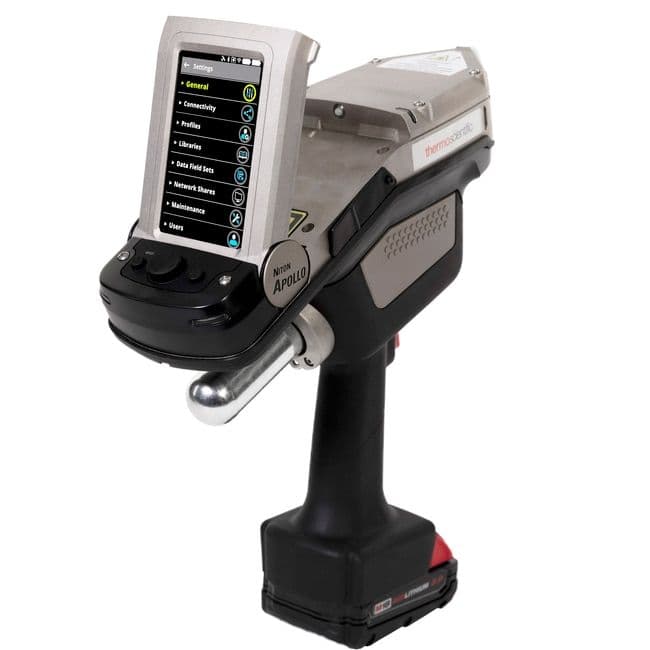
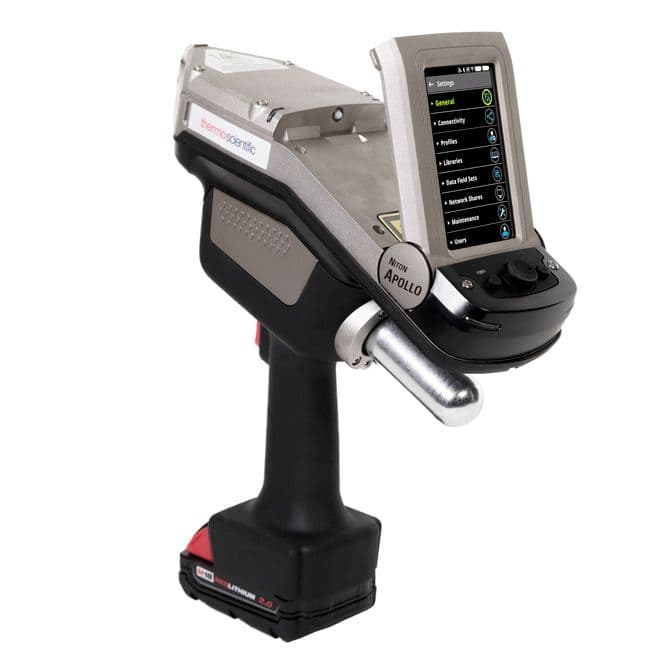
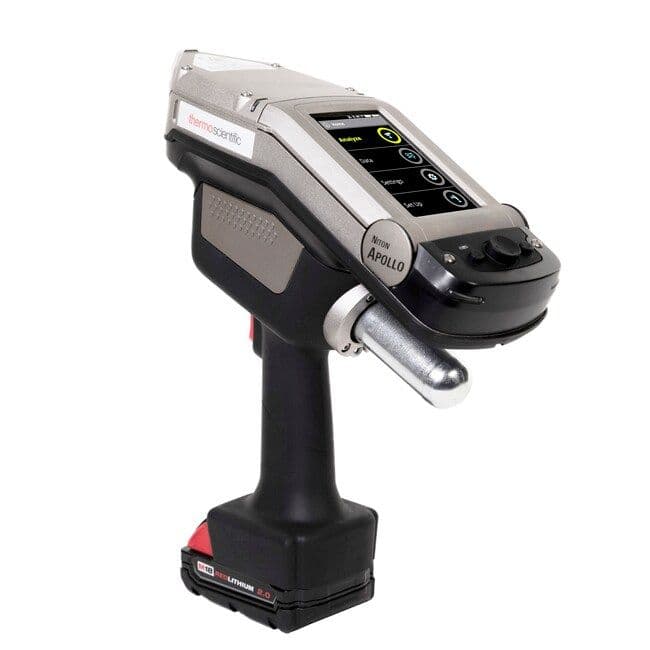
当碳检测和便携性作为首要考虑的问题时,Niton™ Apollo™ 手持式 LIBS 分析器是工业企业值得信赖的选择。
森德仪器提供 赛默飞/Thermo Fisher Niton™ Apollo™ 手持式 LIBS 分析器 在全国范围内的代理经销、选型咨询、报价沟通、采购支持、安装培训和售后协同服务,价格面议。

微信扫码沟通
扫码添加技术顾问,发送产品型号或应用需求。
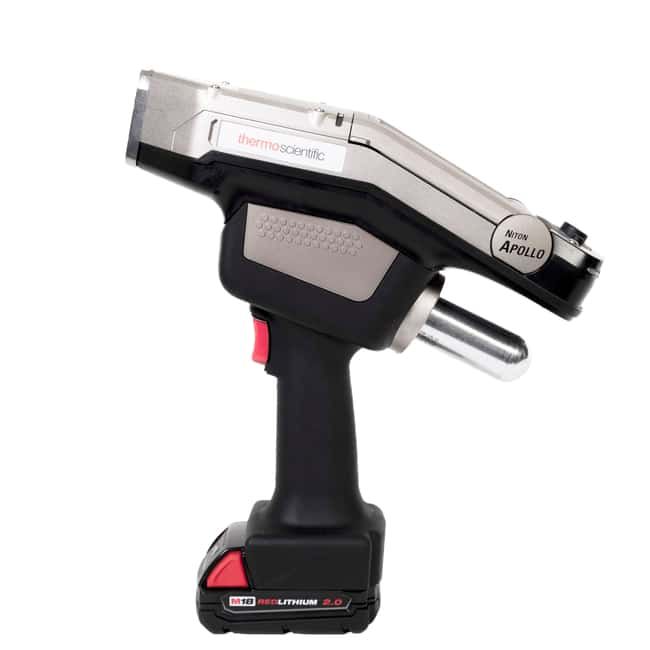
使用 Thermo Scientific™ Niton™ Apollo™ 手持式 LIBS 分析器进行可靠的元素分析。当碳检测和便携性作为首要考虑的问题时,Niton Apollo的卓越性能可帮助工业企业提高生产力。Niton Apollo可分析低合金钢/碳钢、不锈钢并且可以区分L级和H级钢材。Niton Apollo将传统的推车式发射光谱(OES)系统转变为一个小巧、便携且易于使用的手持式分析仪。
特点 & 优点
应用


采购问答
<p>The Niton Apollo Handheld LIBS Analyzer comes with the following accessories:<br/><br/> - Locking shielded carrying case<br/> - Two (2) Milwaukee M18 Redlithium High Demand CP2.0 Battery Packs<br/> - One (1) Milwaukee M18 & M12 Multi-Voltage Charger<br/> - Thermo Scientific analytical argon<br/> - Setup standards<br/> - Laser safety glasses<br/> - Instrument cleaning kit<br/> - Safety lanyard and carabiner<br/> - PC connection cable</p>
<p>The Niton Apollo Handheld LIBS Analyzer is IP54 certified, meaning that it is sealed against moisture and dust. The splash and dust proof design ensures uninterrupted operation and worry-free use virtually anywhere.</p>
<p>At this time, the Niton Apollo Handheld LIBS Analyzer supports English only. Additional languages will be added in the future. Be sure to check back frequently as we make continuous updates to the Niton Apollo analyzer.</p>
<p>Regular maintenance is vital to ensuring that the Niton Apollo Handheld LIBS Analyzer produces the most analytically accurate outcomes. Maintenance includes daily setup procedures, instrument cleaning, and annual calibration certification.<br/><br/> Daily Set-Up Procedures - serve to normalize the analyzer and include a wave and sensitivity check. It is recommended that “daily set-up” be completed every 8 hr shift.<br/><br/> Instrument Cleaning - removes metal particles from the optic windows to prevent the possibility of signal throughput becoming degraded. It is recommended that instrument cleaning be performed every 1,000 readings. Learn more about instrument cleaning here (https://bcove.video/2BcGJ80).<br/><br/> Annual Calibration Certification - your analyzer comes back to the factory for inspection by our certified technicians. Our team verifies the analytical performance of your analyzer - if necessary, it will be re-calibrated to ensure proper functionality. You will also obtain a certificate (good for one year) stating that your calibration is in proper working order.</p>
Sende Lab
当前页面用于确认具体仪器型号、参数和采购沟通;如果要从行业热点、测试标准、实验室建设和验收资料角度规划整套能力,可继续查看 Sende Lab。
请填写必填信息,我们将在工作日尽快回复。
<p>Yes, Niton Apollo Handheld LIBS Analyzer users can remotely export readings to their network share. Once a connection is established, users can manually or automatically export a CSV file to their network share and bypass steps associated with data extraction using NitonConnect.</p>
<p>Users do have the ability to average readings on the Niton Apollo Handheld LIBS Analyzer. Operators can take anywhere from 2 to 99 readings and average the readings to create a new mean reading.</p>
<p>The Niton Apollo Handheld LIBS Analyzer provides results in about 10 sec.</p>
<p>The Niton Apollo Handheld LIBS Analyzer uses an argon cartridge to produce an argon purge that enhances the signal (sensitivity) of the analyzer. The argon purge serves to ensure that the lowest limits of detection (LODs) are obtained. Thermo Scientific Analytical Argon cartridges are sold in boxes of 5 and 25 with 1 cartridge lasting about 200 measurements.</p>
<p>While both handheld LIBS and mobile OES provide quantitative analysis, there are a number of key differences to consider.<br/><br/> Operation - Mobile OES applies electrical energy in the form of a spark generated between an electrode and a sample. Analysis is achieved by exciting atoms in the plasma to create an emission spectrum specific to each element. LIBS on the other hand uses a high energy pulsed laser to ablate a sample. The sample forms a plasma with a plume where various atomic and ionic emission lines can be observed and analyzed.<br/><br/> Portability - Handheld LIBS easily and safely travels with a user for various tasks where mobile OES can be difficult to deploy. The Niton Apollo Handheld LIBS Analyzer is equipped with a pistol-grip design and tapered nose to access hard to reach places. Including the battery, the Niton Apollo analyzer weighs 6.4 lbs (2.9 kg). Conversely, a mobile OES can weigh upwards of 40 lbs (18.15 kg) and is mounted to a cart containing a hose, making the total range of motion extremely limited. When factoring in the argon tank required to accompany mobile OES, users can expect to add up to an additional 50 lbs (22.67 kg). Total mobile OES solutions can weigh upwards of ˜90 lbs (40.82 kg) depending on the size of the argon tank. The argon output on the Niton Apollo analyzer has been significantly miniaturized to further aid portability - it contains an internal regulator accepting one argon cartridge weighing less than 14 oz (396.89 g).<br/><br/> Analysis Time - Analysis time on the Niton Apollo analyzer is about 10 sec compared to about 15 sec on mobile OES.<br/><br/> Instrument Setup - The Niton Apollo analyzer is delivered pre-calibrated from the factory. To maintain the device, users must perform daily setup procedures to help normalize the analyzer. Daily setup takes less than 10 min and includes the following: 1) Wave Check - must receive one pass reading of a provided check sample, and 2) Sensitivity Check - must obtain “pass” readings of all check samples for each mode. Daily setup for mobile OES can take upwards of 20-30 min and consists of several complex steps. </p>
<p>Handheld LIBS and XRF are best thought of as complementary technologies. When used together, users can expect to measure a greater range of elements. For example, LIBS can detect lighter elements, such as carbon (C), that handheld XRF is unable to. Handheld XRF is considered non-destructive, while LIBS is minimally destructive. More user maintenance is required for LIBS such as instrument cleaning, sample preparation, and daily setup, whereas XRF requires little upkeep and is best summarized as “point and shoot”.</p>