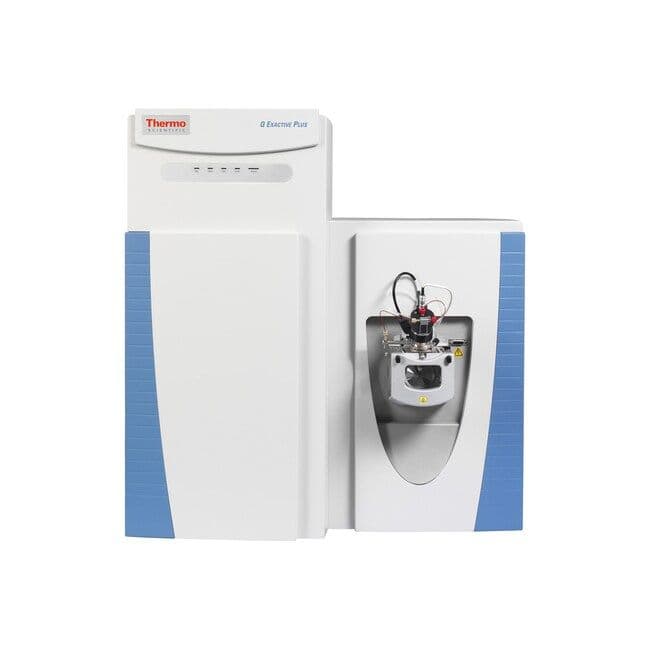
Q Exactive™ BioPharma 平台
Q Exactive BioPharma质谱仪提供卓越的完整分析和亚单位自上/中而下分析,Orbitrap质量分析仪提供肽图谱分析。
森德仪器提供 赛默飞/Thermo Fisher Q Exactive™ BioPharma 平台 在全国范围内的代理经销、选型咨询、报价沟通、采购支持、安装培训和售后协同服务,价格面议。

微信扫码沟通
扫码添加技术顾问,发送产品型号或应用需求。
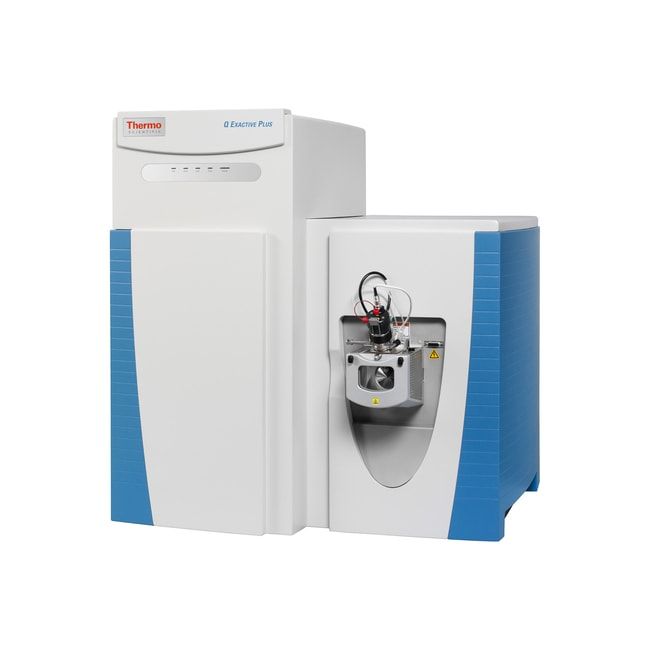
借助于 Thermo Scientific™ Q Exactive™ BioPharma平台实现生物大分子药物的完整表征。该平台提供了针对前三种蛋白质表征工作流程进行优化的独特运行模式: 高质量范围模式在非变性条件和变性条件下实现最佳的完整蛋白质分析,提供最高质量的光谱。 蛋白质模式确保了亚单位的同位素分辨率,并便于进行自上/中而下的测序。 标准模式以无与伦比的采集速度、极佳的质量准确度和卓越的光谱质量执行肽图谱分析。
Thermo Scientific™ Q Exactive™ Plus 和 Q Exactive™ HF 混合四极杆-Orbitrap™ 质谱仪为功能最强大的台式肽图谱分析仪增添了卓越的变性和非变性 MS 完整分析以及亚单位自上/中而下分析功能。当与 Thermo Scientific™ BioPharma Finder™ 软件结合时,其将为 BioPharma 表征提供一整套集成的软硬件解决方案。
Thermo Scientific™ Q Exactive™ BioPharma 平台提供了针对前三种蛋白质表征工作流程进行优化的独特运行模式:
采购问答
<p>A turbomolecular pump may be switched off because of one of the following reasons:<br/><br/> - Turbomolecular pump is blocked<br/> - Failure of fans in turbomolecular pump<br/> Each of the above reasons might lead to an overheating of the pump. When overheated, a turbomolecular pump switches off automatically to prevent its destruction. This overheating protection prevents the outbreak of a fire and minimizes the risk of destructing the pump.<br/><br/> If the Exactive Series mass spectrometer does not work as expected, use the Tune software for error diagnosis:<br/> - The instrument status window displays real-time status information for the instrument components. All parameters are arranged in a tree view. In addition to showing numerical values of parameters (for example, pump speeds or component temperatures), the instrument status window uses icons to indicate the statuses of system components.<br/> - The messages window displays real-time information about the statuses of the instrument, the control service, or other programs. It might display additional information.<br/><br/> In case of an overheated turbomolecular pump, shut down the mass spectrometer as described on page 6-8 of the manual (https://assets.thermofisher.com/TFS-Assets/CMD/manuals/man-bre0012255-exactive-series-manbre0012255-en.pdf). To prevent permanent damage to components of the Exactive Series mass spectrometer, Thermo Fisher Scientific recommends that you call a Thermo Fisher Scientific field service engineer. <br/><br/>Find additional tips, troubleshooting help, and resources within our <a href="https://www.thermofisher.com/us/en/home/technical-resources/technical-reference-library/mass-spectrometry-support-center.html?icid=faqsc39">Mass Spectrometry Support Center</a>.</p>
<p>The UHV chamber heating control may have failed. During general operation of the mass spectrometer, the temperature of the UHV chamber is not regulated. Only during a system bakeout, electric power is supplied to the heating elements of the UHV chamber. The heating always operates at maximum power. Thus, failure of the heating control does not lead to a dangerous overheating of the mass spectrometer. If the Exactive Series mass spectrometer does not work as expected, use the Tune software for error diagnosis:<br/><br/> - The messages window displays real-time information about the statuses of the instrument, the control service, or other programs. If the heating was terminated, the window displays a corresponding error message.<br/><br/> In case of a failure of the UHV chamber heating control, shut down the mass spectrometer as described on page 6-8 of the manual (https://assets.thermofisher.com/TFS-Assets/CMD/manuals/man-bre0012255-exactive-series-manbre0012255-en.pdf). To prevent permanent damage to components of the Exactive Series mass spectrometer, Thermo Fisher Scientific recommends that you call a Thermo Fisher Scientific field service engineer. <br/><br/>Find additional tips, troubleshooting help, and resources within our <a href="https://www.thermofisher.com/us/en/home/technical-resources/technical-reference-library/mass-spectrometry-support-center.html?icid=faqsc39">Mass Spectrometry Support Center</a>.</p>
Sende Lab
当前页面用于确认具体仪器型号、参数和采购沟通;如果要从行业热点、测试标准、实验室建设和验收资料角度规划整套能力,可继续查看 Sende Lab。
请填写必填信息,我们将在工作日尽快回复。
<p>Here are possible causes and solutions:<br/> -System was vented because of a main power failure: A main power failure has the same consequence as switching off with the main power circuit breaker switch. If the power is available again, the system is started up automatically: the pumps are switched on and the vacuum is created. If the system has been vented during the mains failure, it is necessary to bake out the system to obtain the operating vacuum. See “Baking Out the System” on page 8-12 of the manual. If the log file of the data system shows a reboot of the system and the pressure reading in the Tune software shows a bad vacuum, this indicates that the system was vented. In case of frequent but short power failures, we recommend that you install an uninterruptible power supply (UPS). If main power failures occur frequently while the system is not attended (for example, in the night), we recommend that you install a power fail detector. - Vacuum leak: Refer to pages 7-5 and 8-12 in the Operator's Manual (https://assets.thermofisher.com/TFS-Assets/CMD/manuals/man-bre0012255-exactive-series-manbre0012255-en.pdf). <br/><br/>Find additional tips, troubleshooting help, and resources within our <a href="https://www.thermofisher.com/us/en/home/technical-resources/technical-reference-library/mass-spectrometry-support-center.html?icid=faqsc39">Mass Spectrometry Support Center</a>.</p>
<p>Clogging of the H-ESI spray needle is generally caused by the presence of non-volatile components in the injected samples. If the non-volatile components of the samples are not removed during sample preparation, they will be injected onto the column where they will gradually bleed off over time into the detector. They may also be directly introduced by the use of non-volatile buffers in the mobile phase. Non volatile buffers should be avoided in LC-MS analysis because the spray needle will clog frequently and in addition the MS optics will quickly become contaminated.<br/><br/> Clogging issues may be worsened when using a divert valve or bypass valve. This is because when the valve switches to waste the LC flow to the needle is stopped, causing the residual liquid in the hot needle to quickly evaporate. This in turn causes the non-volatile components to deposit on the inner wall of the tubing which will eventually clog it.<br/><br/> When using a divert or bypass valve, the issue may be fully resolved by adding another HPLC pump to supply make-up flow through the needle when the column eluent is bypassed. The second pump is connected to the divert valve or bypass valve so that when the eluent is diverted to waste, clean solvent flows through the needle to help keep it clean. Alternatively, sample preparation procedures should be modified to reduce the amount of non-volatile components in each sample injection. <br/><br/>Find additional tips, troubleshooting help, and resources within our <a href="https://www.thermofisher.com/us/en/home/technical-resources/technical-reference-library/mass-spectrometry-support-center.html?icid=faqsc39">Mass Spectrometry Support Center</a>.</p>
<p>The HCD Cell consists of a straight multipole (octapole) device mounted within a metal tube. The metal tube is in turn connected to the C-Trap in direct line of sight.<br/><br/> The voltage offset between the C-Trap and the HCD Cell is used to accelerate the precursor ions into the gas filled cell. Inside the HCD cell, ions collide with the neutral gas causing rotation, stretching and ultimately cleaving bonds to create fragment ions and neutral species, which are subsequently removed by the vacuum system.<br/><br/> The generated fragment or product ions are then pushed back toward the C-Trap and focused before being pushed toward the Orbitrap analyzer. <br/><br/>Find additional tips, troubleshooting help, and resources within our <a href="https://www.thermofisher.com/us/en/home/technical-resources/technical-reference-library/mass-spectrometry-support-center.html?icid=faqsc39">Mass Spectrometry Support Center</a>.</p>
<p>AGC stands for Automatic Gain Control.<br/><br/> The Automatic Gain Control alters the number of ions in the Orbitrap by filling the C-trap for a calculated period of time. This way, ions can enter the mass analyzer at specified times only.<br/><br/> The ions are gated in the C-Trap and compressed into a narrow cloud before being pushed out to the Orbitrap. The AGC is calculated and during the injection time is when the ions can pass into the C-Trap. Hence, Ion “gating” occurs by changing the polarity of the split lens after the first multipole.<br/><br/> Depending on the experiment and other instrument parameters, the AGC is calculated in three different ways:<br/><br/> AGC Calculated with a Prescan:<br/> When the system is performing the first scan of the run, the instrument will perform a Prescan to calculate the number of ions at that time and to adjust the injection time for the analytical scan accordingly. This is achieved by opening the trap for 1 ms and by performing an acquisition in the Orbitrap (~200 ms).<br/><br/> AGC Calculate on a Scan-to-Scan basis: When two consecutive full scans are acquired within 400 ms, the instrument will use the previous Full Scan TIC to adjust the injection time.<br/><br/> pAGC (predictive AGC): When the method is setup to perform data dependent MS experiments, the dependent scans will use their master scan (Full Scan) as a reference for the AGC calculation. <br/><br/>Find additional tips, troubleshooting help, and resources within our <a href="https://www.thermofisher.com/us/en/home/technical-resources/technical-reference-library/mass-spectrometry-support-center.html?icid=faqsc39">Mass Spectrometry Support Center</a>.</p>
<p>Yes, it is possible to work in polarity switching mode. The switching time is about 250 ms. With a resolution of 35,000 it takes about 1 s for a cycle of one positive and one negative scan (data point).<br/><br/>Find additional tips, troubleshooting help, and resources within our <a href="https://www.thermofisher.com/us/en/home/technical-resources/technical-reference-library/mass-spectrometry-support-center.html?icid=faqsc39">Mass Spectrometry Support Center</a>.</p>
<p>Mass calibration should be performed daily by default. If the lab qualified the instrument in their controlled conditions, weekly calibration is fine. System calibration should be performed monthly. Generally, we specify less than 3 ppm mass deviation within 24 hr.<br/><br/>Find additional tips, troubleshooting help, and resources within our <a href="https://www.thermofisher.com/us/en/home/technical-resources/technical-reference-library/mass-spectrometry-support-center.html?icid=faqsc39">Mass Spectrometry Support Center</a>.</p>
<p>In PRM, you can choose a lower resolution because of the selectivity of MS2 ions.<br/><br/> If you need to do polarity switching in Full Scan mode, it is a good idea to reduce resolution to 35,000 to generate more data points. However, this might generate less data points.<br/><br/> If you want to work qualitatively, you might want to consider to work with lock masses and the highest resolution (fine isotopic pattern). View table <a href="https://www.thermofisher.com/us/en/home/technical-resources/technical-reference-library/mass-spectrometry-support-center/liquid-chromatography-mass-spectrometry-instruments-support/exactive-plus-orbitrap-mass-spectrometer-support/exactive-plus-orbitrap-mass-spectrometer-support-getting-started.html?open=g4#g4">here</a> for suggested resolution settings.<br/><br/>Find additional tips, troubleshooting help, and resources within our <a href="https://www.thermofisher.com/us/en/home/technical-resources/technical-reference-library/mass-spectrometry-support-center.html?icid=faqsc39">Mass Spectrometry Support Center</a>.</p>
<p>AGC targets of Full Scan: 1 x 10E6 and SIM/PRM: 2 x 10E5 are good starting points. The more similar the ions that are collected in the C-trap are, the lower the target should be.<br/><br/> Max IT: <p>View table <a href="https://www.thermofisher.com/us/en/home/technical-resources/technical-reference-library/mass-spectrometry-support-center/liquid-chromatography-mass-spectrometry-instruments-support/exactive-plus-orbitrap-mass-spectrometer-support/exactive-plus-orbitrap-mass-spectrometer-support-getting-started.html?open=g3#g3">here</a> to see the scan times required for the different resolution settings.<br/><br/> In the simplest case, set the max IT to times just below these values - parallel acquisition.<br/><br/> In Full Scan mode, usually the defined max IT time is not used by the system as the ion flux is very high. In data dependent MS2 scans, the time can be extended to receive a better spectrum quality. However, this might generate less data points.<br/><br/>Find additional tips, troubleshooting help, and resources within our <a href="https://www.thermofisher.com/us/en/home/technical-resources/technical-reference-library/mass-spectrometry-support-center.html?icid=faqsc39">Mass Spectrometry Support Center</a>.</p>